
A customer places an order at 4:57pm. Your advertised cut-off is 5pm. Does that parcel leave the warehouse today?
It depends on the agreed cut-off, the warehouse’s capacity and the courier’s collection time. Same-day dispatch is a carefully managed process, not a last-minute dash to the van.
For online sellers in Hertford, Enfield, London and nearby areas, understanding that process helps you set clear delivery expectations and capture more orders. Here’s what really happens during the final hour at a fulfilment warehouse in Hertford.
What does a same-day dispatch cut-off mean?
The cut-off is the latest time an eligible order can be received and processed for dispatch that working day. It is not the courier’s collection time.
A warehouse needs time to pick the items, pack them, create shipping labels and prepare parcels for collection. So the cut-off must sit before the courier arrives.
For example, if a courier is due to collect at 6pm, the warehouse may set an earlier customer order deadline to leave enough time to prepare all eligible orders. The right time depends on the collection schedule, order volume, product requirements and warehouse capacity.
There is no universal cut-off that suits every seller. A credible 3PL in Hertfordshire agrees its cut-off around the real operation and makes the terms clear.
The final hour: from order queue to courier handover

In the last hour, the team is working through a planned workflow. Orders are not simply thrown into boxes and hurried outside.
1. The team confirms the final orders
Orders received before the agreed cut-off flow into the warehouse system. The team checks that each order is ready to process, including whether the items are in stock and whether the order needs special handling.
An order with missing information or unavailable stock may need a quick check before it can move forward.
2. Pickers collect the right products
Warehouse staff use the order details to find the correct stock locations and quantities. They scan or check items as they go, helping to reduce picking errors.
If you sell fragile, bespoke or multi-item products, your agreed working instructions can explain exactly how the team should handle and check them. At TASS, we can create custom Standard Operating Procedures with you, so the fulfilment process reflects your business.
3. Packers prepare each parcel
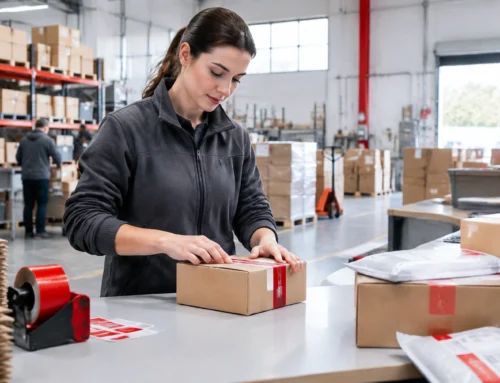
At the packing bench, the team checks the items again, chooses suitable packaging and adds any inserts or branded materials included in your instructions. They then attach the shipping label.

A reliable warehouse and fulfilment operation makes these steps part of a repeatable process. That matters when you ship a few orders a day and when volumes climb.
4. The warehouse creates the dispatch manifest
A manifest groups parcels for the relevant courier or service. The team sorts the prepared orders so the right parcels are ready for the right collection.
This is also where the warehouse can spot an exception, such as a parcel assigned to the wrong service or an order that needs clarification.
5. Parcels are handed to the courier
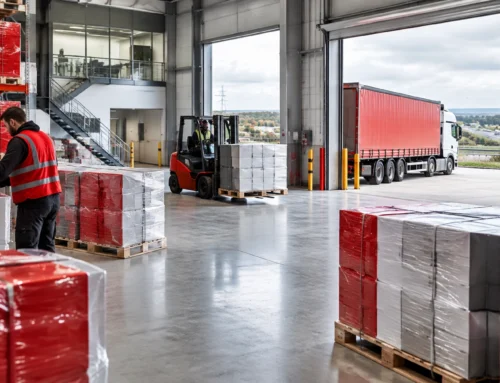
The team moves the sorted parcels to the collection point and hands them over to the driver. The collection and carrier scan help confirm that the parcels have entered the delivery network.
Same-day dispatch means the parcel leaves the warehouse that day. It does not, by itself, guarantee next-day delivery. Delivery depends on the service selected, destination and carrier.
Why Hertford and Enfield location matters
A cut-off depends on more than the clock. It also depends on when the courier collects and how the warehouse connects with its delivery network.
Hertford’s position near the A10 and M25 corridor gives carriers access to routes serving London, Enfield and surrounding areas. That makes the location relevant for businesses shipping from Hertfordshire into north London and across the UK.
But a nearby route does not automatically mean a later cut-off. The warehouse still needs a confirmed collection schedule and enough time to prepare orders safely. A useful cut-off is one the operation can meet consistently, not simply the latest time that sounds attractive on a product page.
TASS is based at 21 Merchant Drive, Hertford, Hertfordshire, SG13 7AY. We support businesses across Hertford, Enfield, Cheshunt, Hoddesdon, Ware, Broxbourne, London and surrounding local areas. Learn more about our fulfilment services and storage solutions.
Why a later cut-off can help your online business
A later order window gives customers more time to buy and still qualify for same-day dispatch. That can matter to shoppers making a decision during the afternoon.
Clear, dependable dispatch information can also reduce “Where’s my order?” emails. Customers know when their parcel is expected to leave, and your team has a consistent process for explaining what happens next.
The key word is dependable. A later cut-off only helps if the warehouse and courier can meet it. For ecommerce fulfilment in the UK, make sure the cut-off shown at checkout matches the service your fulfilment partner has agreed to provide.
How does a 3PL cut-off compare with packing at home?
If you pack orders from a spare room or garage, you control the workflow. But you also handle every step yourself: finding stock, packing, labelling, booking or sorting shipments, and getting parcels to the courier.
That can work well while order numbers are manageable. It gets harder when orders arrive in a rush, you need to leave the house or you have to keep selling while packing.
A 3PL, also called a third-party logistics provider, runs these tasks as part of a warehouse operation. It can give you organised stock handling, a defined dispatch process and support as volumes change. That can suit a new seller as well as an established retailer looking for a 3PL in Hertfordshire.
Practical ways to match your store to the warehouse cut-off
Set a customer promise you can keep. Before you publish a same-day dispatch message, agree the operational cut-off and collection schedule with your warehouse.
Then:
- Match your order windows to the agreed cut-off. Set your Shopify, Amazon or eBay dispatch settings to reflect the warehouse’s real operating days and deadlines.
- Explain what the promise means. Say “same-day dispatch” when you mean the order leaves the warehouse that day. Avoid promising a delivery date unless the service supports it.
- Promote the cut-off clearly. If your warehouse confirms a deadline, show it on relevant product, basket and delivery pages.
- Check exceptions. Personalised items, unusual packaging, bulky goods or orders needing extra checks may need different processing arrangements.
- Review performance as your business grows. A cut-off that works at one order volume may need adjustment during a promotion or seasonal rush.
What happens if an order misses the cut-off?
If an order arrives after the agreed deadline, it normally joins the next eligible dispatch run, often the next working day. It has not been lost.
Your store should make this clear to the customer. Weekend orders, bank holidays and orders received after a daily cut-off may follow a different schedule, so set expectations on your website and in order confirmation emails.
Do weekend and peak-season cut-offs change?
They can. Weekend collections depend on the warehouse and courier arrangements. Never assume a weekday cut-off applies on Saturday or Sunday.
Peak season needs the same careful planning. Black Friday and December can bring sharp increases in order volumes. A warehouse may agree extended cut-offs or extra operating arrangements for a specific period, but only when staffing, capacity and courier collections support them. Confirm the plan in advance rather than relying on the usual schedule.
Frequently asked questions
Does same-day dispatch mean next-day delivery?
No. It means the warehouse dispatches the parcel on the day the eligible order is received. Delivery time depends on the selected service and destination.
Can every product qualify for same-day dispatch?
Not always. Availability, order details, packaging needs and any special handling instructions can affect eligibility. Agree these rules with your warehouse and display them clearly.
Is a later cut-off always better?
No. A later deadline can capture more orders, but only if the warehouse and courier can meet it reliably. A clear promise delivered consistently is more useful than an ambitious deadline that is regularly missed.
Can a small business use a fulfilment warehouse?
Yes. Outsourced fulfilment can support businesses at different stages, from startups managing their first stock to established sellers scaling distribution. TASS offers flexible storage and fulfilment solutions to suit different requirements.
Talk to TASS about same-day dispatch
The cut-off hour works when warehouse teams, systems and courier collections follow one clear plan. If you’re comparing a fulfilment warehouse in Hertford, warehouse in Enfield or wider fulfilment warehouse UK options, ask how orders move from checkout to courier handover, and what happens when a deadline is missed.
TASS supports businesses across Hertford, Enfield, London and surrounding areas with flexible warehouse and fulfilment services. Call 01992 505 500 to talk about same-day dispatch and fulfilment.