
It’s mid-October. If you’re restocking for Q4, your storage decisions now can shape how quickly you pick and dispatch orders during Black Friday and the peak season rush.
The question isn’t just how much space do you need? It’s how should your stock be stored? Pallet racking works well for bulk cartons and reserve stock. Shelving gives pickers quick access to smaller products and fast-moving SKUs. Many businesses need both.
Here’s how to choose the right format for your stock, your orders and your next stage of growth.
Pallets, racking and shelving: what’s the difference?
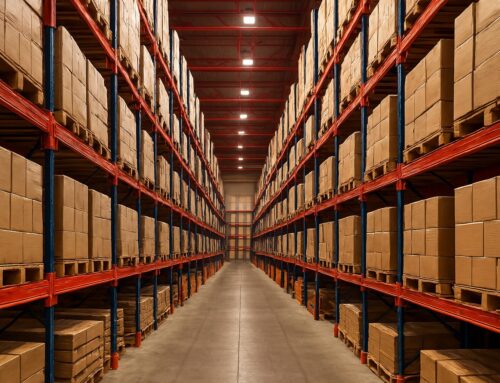
Pallet storage keeps goods together on a pallet. It suits stock delivered in bulk, full cartons, heavier items and products you move in pallet quantities. In a warehouse, pallets are often stored on racking so the building’s vertical space can be used.
Shelving holds smaller cartons, individual products or bins. Each item or SKU can have its own accessible pick location. That makes shelving a practical choice when orders contain a few items from a wide product range.
They solve different problems. Pallet racking helps you store reserve stock efficiently. Shelving helps your team reach individual products without handling a full pallet.
How does storage format affect picking speed?
For e-commerce orders, a picker often needs one or two items from several different SKUs. If each product has a clearly labelled location on shelving, they can walk to the right place and pick the required quantity.
If those products are buried in cartons on a pallet, picking can take longer. The team may need to open cases, move goods or bring the pallet down before they can select one item. That adds handling and can slow down order processing.
Pallets are still valuable. They work well when you’re picking full cases, shipping wholesale quantities or replenishing a smaller pick area. The key is to avoid making the same pallet serve as both your bulk reserve and your main location for every individual order.
A useful rule:
- Single items and small order quantities: shelving or bins.
- Full cartons and bulk orders: pallets in racking.
- Fast-moving small SKUs: accessible shelving, with reserve stock nearby.
Your order pattern matters as much as your stock volume. A product that sells in full-case quantities may be a good fit for pallet picking. The same product, sold individually across frequent online orders, may need a shelf-level pick location.
Which format makes better use of space?
Pallet racking can make good use of warehouse height. It stores palletised goods in organised positions, which is useful for larger volumes of cartons and reserve inventory.
Shelving creates more easy-to-reach locations for individual products. It may not store as much bulk stock in the same footprint, but it can make a broad range of small items easier to organise and pick.
So “space efficiency” doesn’t just mean fitting the most stock into a building. A dense layout can create extra travel or handling if popular products are hard to reach. A well-planned layout stores inventory in a way that supports how it moves: bulk stock in appropriate pallet positions, and frequently picked items in accessible locations.
For businesses comparing a storage facilities business or a storage facility business, ask more than how many pallet spaces are available. Ask how the provider can support your individual SKUs, picking, replenishment and seasonal changes.
Cost per pallet position: what should you compare?
Pallet storage is often priced by pallet space. That gives you a clear way to estimate the cost of storing palletised stock. But a pallet position and a shelf pick location do not hold the same type or quantity of stock, so the headline rates aren’t directly comparable.
For a fair comparison, consider what each format helps you do:
- Pallet positions: suitable for stock arriving, storing or moving in pallet quantities.
- Shelf locations: suitable for storing and picking smaller products or cartons individually.
- Total fulfilment cost: include handling, replenishment and the time needed to pick and pack orders.
If you sell many small SKUs, choosing pallets based only on the cost per position may not show the full picture. The more useful question is whether the layout supports accurate picking at a cost that works for your business.
TASS Enterprise offers flexible commercial storage in Hertford, including pallet storage. For Hertford storage, check whether the service fits your stock, the way you sell and the support you need, not just the available space.

What about stock accuracy?
Both formats can support accurate stock control when every product has a clear location and the team follows agreed processes.
Shelving makes it easier to give small SKUs individual pick locations. That can help prevent similar-looking products from being mixed up. Clear labels and consistent routines matter, especially when you carry a large range.
Pallet racking provides defined positions for pallet loads. That can make it easier to identify and count reserve stock. When items are picked from a pallet for single orders, though, the remaining quantity needs to be recorded and managed correctly.
Accuracy isn’t automatic. It depends on clear product identification, reliable stock records and agreed ways of handling goods in, picking, packing and returns. A managed warehouse and fulfilment partner can build those steps into custom Standard Operating Procedures for your operation.
Which format suits your business?
E-commerce and direct-to-customer orders
If you ship individual products, shelving is often a better fit for your active picking stock. It gives the team access to small items without needing to move a pallet for each order.
That matters in ecommerce fulfilment UK, where a growing retailer may have more SKUs, promotions and order combinations to manage as peak demand approaches.
Wholesale and bulk orders
If customers order full pallets or cases, pallet racking is a strong option for reserve stock and larger-volume dispatch. It keeps bulk inventory together and supports movement with pallet-handling equipment.
Businesses with a changing product range
If your stock includes both bulky cartons and small, fast-moving items, a mixed layout may make more sense than choosing one format for everything. This is common in logistics in retail, where a business may replenish stock in bulk but sell it by the individual item.
Why a mix of pallets and shelving often works best
A managed facility can use pallet positions for reserve stock and shelving for active pick locations. When a shelf location runs low, the reserve stock can be replenished. This keeps popular items easy to pick without giving up the benefits of storing bulk cartons on pallets.
Consider a growing e-commerce brand. It may start with a few products arriving in full cartons on pallets. Later, it adds more colours, sizes, bundles or product lines. The operation moves from a handful of bulk SKUs to thousands of small pickable products. Keeping everything on pallets can make individual order picking awkward. Moving everything to shelving can waste capacity on reserve stock.
A flexible layout can shift as the product mix changes. Fast-moving items can be positioned for regular picking, while slower-moving or bulk stock stays in pallet storage. The right balance depends on what you sell and how your orders are picked.
TASS Enterprise supports businesses with flexible storage and fulfilment services. We work with companies of different sizes, from small operations to larger stock requirements, and adapt services to their needs. That flexibility is useful whether you’re seeking storage units Hertford businesses can use for commercial stock, or a partner to handle storage, picking and dispatch together.

What should you review before Black Friday?
Before peak orders arrive, review:
- Which SKUs sell most often, and how many order lines they generate.
- Whether you pick single items, full cartons or full pallets.
- Which products need especially careful handling.
- How much reserve stock you expect to hold.
- Whether your current layout makes products easy to locate and replenish.
These checks help you spot when stock has outgrown its current format. They also give your logistics partner a practical starting point for planning storage and pick-and-pack processes before demand rises.
For businesses in Hertford, Enfield, Hertfordshire, London and surrounding areas, the right commercial storage partner should be able to talk through both space and stock handling. TASS Enterprise provides Enfield warehouse services and wider support for businesses looking for 3pl Hertfordshire solutions. We aim to make logistics hassle free, with a flexible approach and our “We Beat Any Quote” guarantee.
If you’re searching for storage Hertford businesses can tailor to their stock, start with a conversation about the products, order profile and service you need. You can also read more about our pallet and archive storage for Hertford, Ware, Enfield and surrounding areas.
FAQs
Is shelving always faster than pallet storage?
No. Shelving usually gives quicker access when picking individual items. Pallet storage is better suited to full-pallet moves or bulk cartons. The right choice depends on how customers order your products.
Can a warehouse use both shelving and pallet racking?
Yes. A hybrid layout can store reserve stock on pallets and keep fast-moving products on shelving for easier picking. This works well when your business both receives stock in bulk and sends out smaller orders.
Are storage units in Hertford the same as managed business storage?
Not necessarily. If you need stock received, stored, picked, packed and dispatched, ask about commercial storage and fulfilment rather than assuming a self-storage unit will cover those services. TASS provides business storage and pallet storage for a range of requirements.
When should I review my storage format?
Review it when your product range expands, order volumes change, or staff spend too long locating and replenishing stock. Mid-October is a practical time to check, before Black Friday and other peak-season demand put extra pressure on picking.
Choose a format that fits the way you sell
The best storage layout is the one that supports your stock today and can adapt as your business grows. Use pallets for bulk and reserve stock. Use shelving for small, frequently picked SKUs. Combine the two when your business needs both.
Talk to TASS Enterprise about storage, pick-and-pack and fulfilment in Hertford, Enfield, London, Hertfordshire and surrounding areas. Call 01992 505 500 to discuss your stock and find a hassle-free logistics solution.