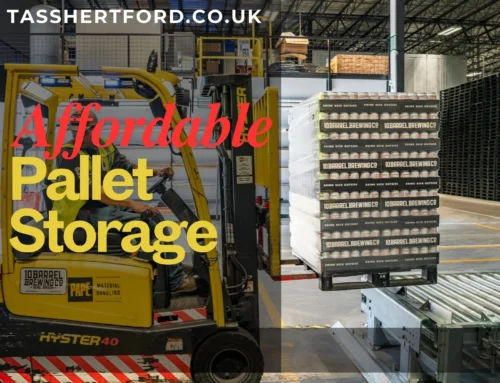

Your stock arrives. Instead of being put away in a warehouse, it is sorted for its destination and loaded onto an outbound vehicle. That is cross-docking: goods move from the inbound dock to the outbound dock with little or no storage time.
For the right products and routes, skipping the shelf can reduce storage costs and get orders moving sooner. But cross-docking is not the answer for every shipment. It depends on having the right stock, reliable timings and a clear destination.
That matters whether you sell online in London, supply shops around Hertford, or move goods through Enfield and surrounding areas. Here’s how to decide if cross-docking fits your business.
What is cross-docking?
In a traditional warehouse, goods arrive, get stored, and wait until an order or replenishment request comes in. Staff then retrieve them and prepare them for dispatch.
With cross-docking, the warehouse team receives goods and transfers them straight to their next vehicle. They may check, sort or label shipments along the way, but the goods spend little or no time in storage.

Cross-docking can work with a single shipment moving through a facility or with goods from several suppliers being directed to known destinations. The key is that the onward movement is planned before the goods arrive. VPD explains the cross-docking process and how it differs from warehousing.
How can skipping storage save you money?
Stored goods take up space and need to be handled. A cross-dock flow can reduce the time stock occupies warehouse capacity and avoid some of the work involved in putting it away and retrieving it later.
It can also shorten lead time. Goods do not have to wait for space to be assigned or for a later release from storage. If inbound and outbound timings line up, stock can continue towards its destination sooner.
The potential savings include:
- Less time paying to store through-moving goods
- Fewer handling steps between arrival and dispatch
- A shorter wait between receipt and onward transport
- Faster movement of stock that has a known customer or store destination
But cross-docking does not make logistics free. The operation still needs people, transport, space at the docks and good coordination. If a vehicle is late or the onward destination is unclear, shipments can be delayed and costs can rise. Compare the full cost of the planned flow with your current storage-and-dispatch process before switching.
Which products are a good fit?
Cross-docking works best when you know where goods need to go and can move them on quickly. It can suit:
- Pre-sold stock with confirmed customer orders
- Promotional or seasonal goods with a planned launch and delivery schedule
- Fast-moving products with steady demand and regular replenishment
- Retail stock that already has clear store or destination instructions
This can support logistics in retail when stores need stock within a set window. It can also suit ecommerce fulfilment uk when orders or onward destinations are already known and timing is predictable.
A product is less suitable when it needs to sit as a buffer against uncertain demand. The same applies when it requires substantial custom work before dispatch, or when the destination is not known at the point of receipt. In those cases, traditional warehousing gives you more flexibility to store inventory and release it when needed.
Cross-docking or traditional warehousing?
| Cross-docking | Traditional warehousing |
|---|---|
| Goods move through quickly | Goods stay in storage until needed |
| Best when demand and destinations are known | Useful when demand can change |
| Can reduce storage time and lead time | Gives you a stock buffer |
| Needs reliable inbound and outbound timings | Allows more flexibility around dispatch |
You do not have to choose one method for all your stock. A hybrid setup can send pre-sold or fast-moving lines through cross-docking while keeping slower or less predictable products in storage.
A warehouse and fulfilment partner can help you assess which flow suits each part of your operation.

A practical decision checklist for your business
Before you route stock through a cross-dock, ask:
- Do we know the destination for each shipment before it arrives?
- Can suppliers provide accurate delivery times and shipment details?
- Can outbound transport be arranged to match the inbound arrival?
- Is demand predictable enough to move stock without holding a buffer?
- Can goods move on without extensive processing or custom work?
- Will the storage and handling savings outweigh the extra coordination?
- What is our fallback if an inbound vehicle or onward delivery is delayed?
If you can answer “yes” to most of these, cross-docking is worth evaluating. If several answers are “no”, keeping stock in a warehouse, or using a mix of both methods, may protect your service levels.
Hertford, Enfield and the London supply chain
The right location depends on where goods come from and where they need to go. For businesses serving London and surrounding areas, a Hertford warehouse may suit stock arriving into Hertfordshire and onward distribution across the region. A warehouse Enfield search may be relevant if your main focus is North London routes.
There is no one-size-fits-all answer. Compare supplier and customer locations, vehicle schedules and how quickly stock must move. If you are searching for storage in Hertford, Hertford storage or storage Hertford, check whether you need space alone or a partner that can also manage goods-in and distribution.
TASS Enterprise is based at Unit 21, Merchant Drive, Mead Lane, Hertford, Hertfordshire, SG13 7AY. We serve businesses in London, Hertford, Enfield and surrounding areas with flexible storage and distribution services. See our storage solutions and distribution services.

Choosing a logistics partner
Cross-docking needs more than an empty patch of floor. You need clear instructions, dependable communication and a partner who understands how each delivery fits your wider operation.
When comparing a storage facilities business with a broader logistics provider, ask how they handle inbound arrivals, destination information and changes to your plan. A storage facility business focused on long-term space may not offer the same support for fast-moving transfers.
Searches such as “storage units Hertford” and “fulfilment centre near me” can help you find local options. Then check whether the provider can support your actual requirements, from storage and distribution to a pick and pack service uk businesses can use as volumes grow. A fulfilment warehouse uk search may also bring up providers serving online retailers, but make sure the location and operating model fit your routes.
TASS works with businesses of different sizes, from small consignments to larger inventory needs. We aim to act as an extension of your team and tailor procedures around your operation. If you need 3pl hertfordshire support, compare the full service, not just the space price.
A local search might also include “enfield fulfilment centre” or “enfield warehouse services”. Use those searches to compare location and capability, rather than assuming that the nearest postcode is automatically the best fit. Likewise, a search for “storage facility business” should lead you to ask whether the provider can manage the movement of goods as well as hold them.
FAQs
Is cross-docking the same as having no warehouse?
No. Cross-docking uses a facility, but goods pass through it rather than being held as long-term inventory. Some shipments may wait briefly while they are sorted or matched with an outbound vehicle.
Can cross-docking work for a small business?
Yes, if you have planned shipments, known destinations and reliable timings. You do not need to be a large retailer. The important question is whether the time and storage savings justify the coordination involved.
Do I have to move all my stock this way?
No. You can use cross-docking for suitable products and retain storage for the rest. This can give you speed for known orders and a buffer for products with uncertain demand.
Does TASS provide cross-docking?
Talk to us about your inbound and outbound requirements. We can discuss how our storage, fulfilment and distribution services may fit your plans, and whether a direct-transfer workflow is suitable for your goods.
Find the right flow for your stock
Cross-docking can cut storage time and speed up distribution when products, destinations and delivery schedules are aligned. When they are not, traditional storage gives you more room to respond to change.
Tell us what you move, where it needs to go and how quickly it must arrive. Call TASS Enterprise on 01992 505 500 to discuss your requirements and ask about our “We Beat Any Quote” guarantee.